CAMPUS TO THE REAL WORLD
It is what it is!
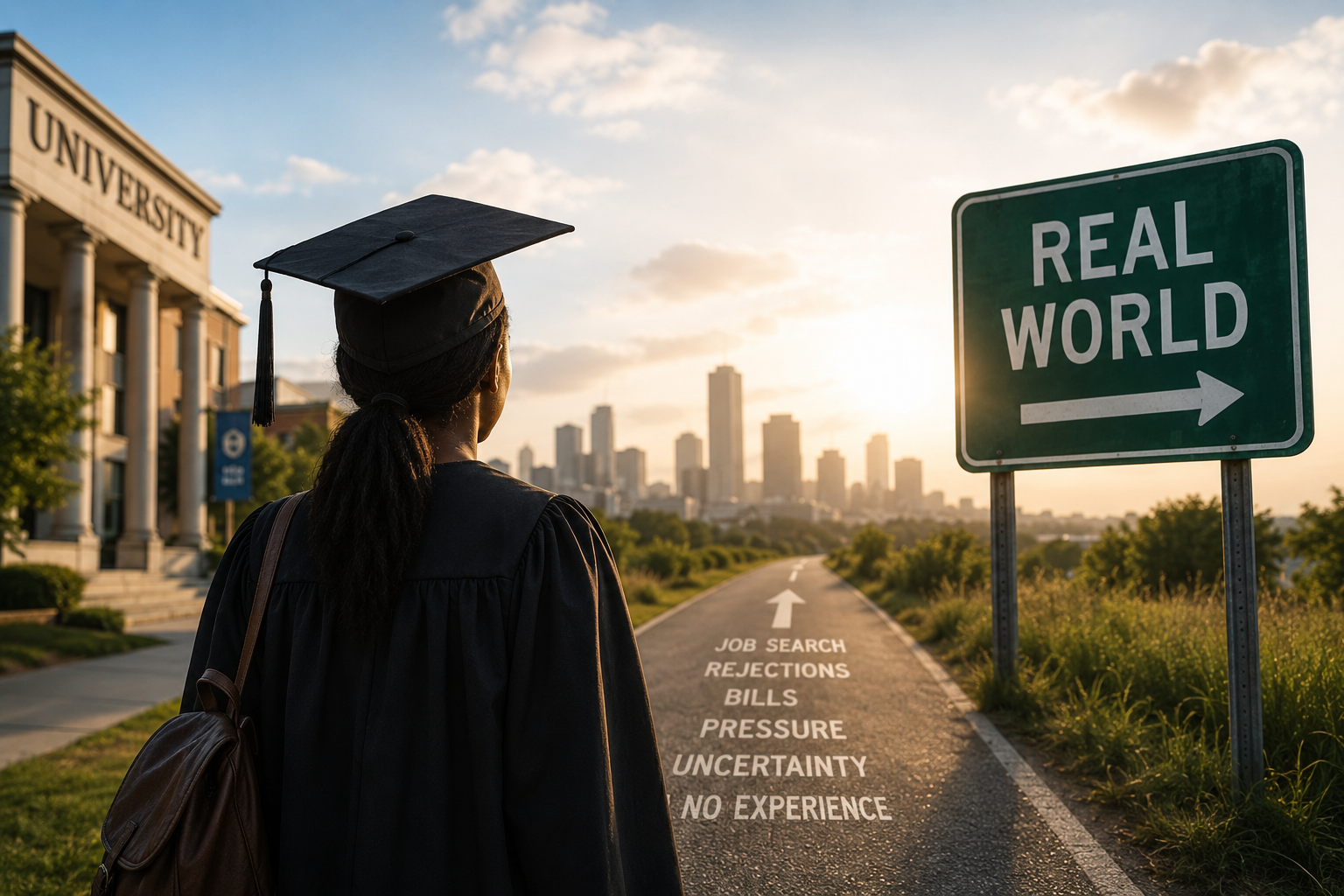
For many students, the last day on campus feels like the end of a long and difficult journey. After years of attending lectures, completing assignments, sitting for examinations and preparing for final projects, graduation is expected to mark the beginning of a better life. A degree is often seen as a ticket to employment, financial independence and a successful future. However, for many graduates, the reality outside the university gates is very different.
Leaving campus can be exciting, but it can also be confusing and stressful. Suddenly, there are no lectures to attend or assignments to complete. Instead, graduates are faced with the difficult task of finding employment, paying bills and building a career. Many discover that having a degree does not automatically guarantee a job.
One of the biggest challenges graduates face is unemployment. Young people spend years studying with the hope of securing employment after completing their education, only to spend months or even years sending applications without receiving a positive response. Some employers require several years of experience even for entry-level positions, leaving fresh graduates wondering how they are expected to gain experience when nobody is willing to give them a chance.
The transition can also be financially challenging. While on campus, some students depend on their parents, guardians or sponsors for basic needs. After graduation, however, expectations quickly change. Family members and society may expect the graduate to become financially independent and even start supporting others. Yet, without a stable income, paying rent, buying food and meeting daily expenses can become a major struggle.
Another reality that universities may not fully prepare students for is the importance of networking. Academic qualifications are important, but professional relationships can also play a significant role in creating opportunities. Graduates who have built relationships with professionals, attended industry events or participated in internships may have an easier time discovering opportunities. For others, entering the job market without professional connections can feel like starting from zero.
The workplace also demands skills that may not always be taught extensively in classrooms. Communication, teamwork, problem-solving, creativity, digital skills, leadership and adaptability are increasingly important. A graduate may perform well academically but still struggle during interviews, when writing professional emails, speaking to clients or adapting to a demanding workplace.
The pressure does not end with employment. Graduates are often constantly compared with their former classmates and friends. Social media can make this pressure even worse. Seeing former classmates posting about new jobs, cars, businesses and achievements can create the impression that everyone else is succeeding while one is being left behind.
For some graduates, this period can also affect their confidence. Repeated job rejections can make someone question their abilities and wonder whether the years spent studying were worth it. However, unemployment after graduation does not mean that a person has failed. The journey from university to a successful career is different for everyone.
Universities therefore have an important role to play in preparing students for life beyond the classroom. In addition to academic knowledge, students need practical exposure to the workplace, career guidance, entrepreneurship skills, networking opportunities and training on how to market themselves professionally. Internships and mentorship programmes can also help students understand what employers expect before they graduate.
Ultimately, graduation should not be viewed as the final destination. It is the beginning of another chapter that requires patience, resilience and continuous learning. The real world may not offer the certainty that many students imagine while on campus, but it provides opportunities to grow, make mistakes and discover new paths.
A university degree can open a door, but it does not determine how quickly a graduate will succeed. Sometimes the journey after campus is difficult, uncertain and full of rejection. Yet, with the right skills, determination and willingness to adapt, the transition from campus to the real world can become the foundation for a meaningful career and an independent life.
Graduation ends the campus journey, but the real world is where the journey truly begins.