
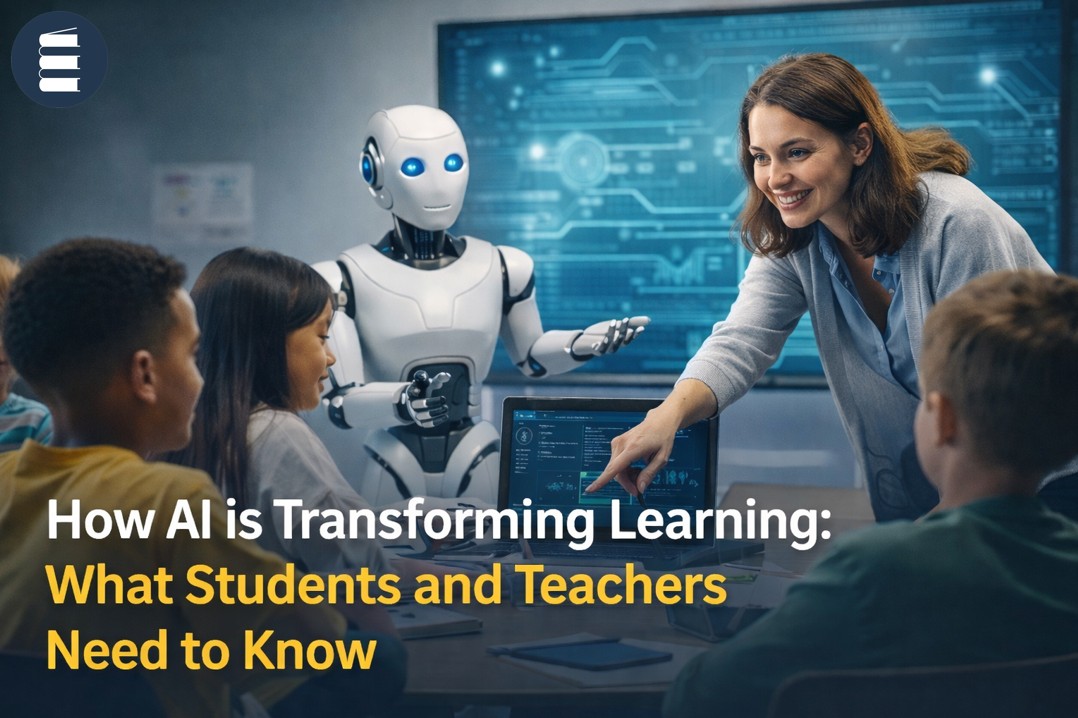
Walk into any classroom today and there’s an invisible new student sitting quietly in the corner. It doesn’t raise its hand. It doesn’t get tired. It doesn’t forget homework.
It’s AI.
And whether schools embrace it or try to ban it, it’s already here.
Let’s talk honestly about what that means.
1. AI Is Personalizing Learning at Scale
For decades, education has mostly followed a one-size-fits-all model. Same lesson. Same pace. Same exam.
AI breaks that pattern.
Modern learning platforms can:
Adapt questions based on a student’s performance
Recommend extra practice where weaknesses are detected
Move fast learners ahead without holding them back
This is powerful. A student struggling with algebra no longer has to drown quietly in the back row. The system notices. It adjusts. It responds.
That said, personalization only works if teachers understand the tools. AI is not a substitute for judgment. It’s a diagnostic assistant, not the doctor.
2. Students Are Using AI Whether Schools Like It or Not
Let’s be real.
Students are already using AI to:
Summarize notes
Generate essay outlines
Explain difficult concepts
Check grammar
The mistake schools make is trying to treat AI like a calculator in 1995. Ban it. Fear it. Label it cheating.
The smarter move? Teach students how to use it properly.
Instead of asking:
“Did you use AI?”
Ask:
“How did you use AI?”
There’s a difference between outsourcing your thinking and enhancing it.
3. Teachers Can Work Smarter, Not Harder
AI isn’t just for students.
Teachers are using AI to:
Generate lesson plans
Create quizzes
Draft feedback
Differentiate instruction
Analyze performance trends
This reduces burnout. And teacher burnout is real.
If AI handles repetitive tasks, teachers can focus on:
Mentorship
Critical thinking
Discussion
Emotional support
The human side of education becomes more valuable, not less.
4. The Risk: Shallow Learning
Here’s the uncomfortable part.
If students rely blindly on AI, they risk losing:
Deep thinking
Problem-solving ability
Writing skills
Intellectual struggle
And struggle is not a bug in education. It’s a feature.
AI can give answers. But it cannot replace the mental friction that builds real understanding.
Schools must design assignments that:
Require analysis, not just information
Encourage originality
Reward reasoning over repetition
AI should be a tool, not a shortcut.
5. The Future Classroom Will Look Different
In the next few years, we’ll likely see:
AI-powered tutoring systems available 24/7
Data dashboards guiding instruction
Smart content generation tailored to student level
Voice-based learning assistants
Automated assessment tools
But here’s the twist:
The most successful schools won’t be the ones with the most AI.
They’ll be the ones that integrate it wisely.
Technology amplifies culture. It does not replace it.
What Students Should Do
Learn how AI works instead of just using it
Use it to clarify concepts, not copy answers
Build real skills alongside digital assistance
Stay curious
Your ability to think independently will always matter.
What Teachers Should Do
Embrace AI literacy
Redesign assignments for deeper thinking
Teach ethical AI use
Model critical questioning
AI is not the enemy. Ignorance of it is.
Final Thought
AI is not replacing education. It’s reshaping it.
The real question is not:
“Will AI change learning?”
It already has.
The question is:
Will we shape it intentionally or react to it too late?
And that answer depends on schools, teachers, students, and the decisions made today.